|
| . |
 PREVIOUS
PAGE
/ This is Page
5 of 5 Pages
PREVIOUS
PAGE
/ This is Page
5 of 5 Pages
Names and short texts in bold coloured font on these pages
are links to
separate pages and profiles of artists and other persons.
Names in bold font may appear as a link later in the text.
 |
 | . |
 |
|
Also
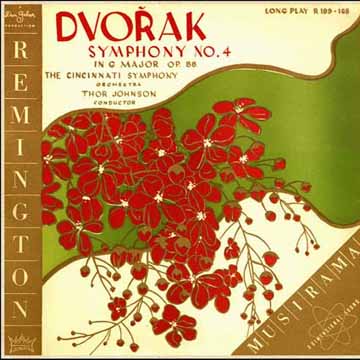
at home in the US several recordings, supervised by Laszlo Halasz, were made with
pianists Jorge Bolet, Edward Kilenyi, Alec Templeton and duo-pianists These
recordings were however released in mono and regrettably were mastered from a
bad copy of the original tape which was made at low speed by Gabor himself. |
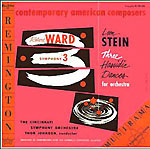 |
Leon
Stein's "Three Hassidic Dances" and Robert Ward's Symphony No. 3 |
 |
The plastic inner sleeve
was a novelty that soon was imitated by other record labels. |
 |
|
Yet
Don Gabor had a feel for quality, but on a different level. Important to him were
the attributes. When RCA introduced the groove guard (gruve guard), which
not only protected the record grooves when sliding the disc into the hard cardboard
cover and when taking it out, but saved an important amount of vinyl, Gabor was
the first to have his records pressed the new way. He actually was the first to
introduce a plastic bag to protect the record. Initially the bag had a printed
text. Later on plain sleeves were used. Columbia followed this fashion and introduced
their plastic sleeves with the Columbia and stereo logos printed on it. The text
on the plastic inner sleeve read: To
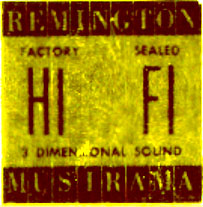
accentuate the new MUSIRAMA quality Don Gabor had stickers printed in gold and
black. The text on the sticker read: "Factory Sealed", giving the impression that
all possible care was taken to offer a high quality record to the consumer. Other
manufacturers followed that idea, afraid as they were not being seen as caring
for quality at the same level and to miss attention. London records, for instance,
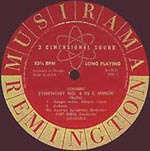
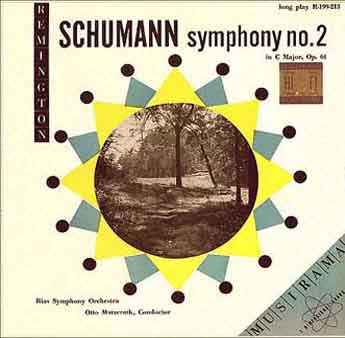
had little silver stickers printed and they adorned many covers. The later pressings of the newest MUSIRAMA releases had red and later blue labels in the same style. Then the pressings were lighter in weight which was more economical and was feasable because of the application of the groove guard. The sound does also differ. The early heavy black label MUSIRAMA records were cut using different electronics with a more tangible sound. The lighter red and blue labeled pressings had a somewhat thinner, less appreciated sound quality. Near the end of the existence of the Remington label the design of the cover was changed once again. Now the Remington logo was smaller and not placed any longer at the left border of the covers. The MUSIRAMA triangle remained. The latest recordings had Anatole Fistoulari (Tchaikovsky's "Francesca da Rimini" and "Theme and Variations from Suite No. 3" - R-199-203), Leopold Ludwig (Hindemith: Mathis der Maler - R-199-209), Otto Matzerath (Schumann: Symphony No.2 - R-199-213), and Eugene(Eugen) Szenkar (Stravinsky: "Firebird" and Prokofiev: "Classical Symphony" - R-199-212; Szenkar's recording was made with the Düsseldorf Symphony instead of the RIAS orchestra). |
 |  |  |
 |
|
An
important aspect of Gabor's marketing strategy always was to have a second, or
even a third and cheaper label. Plymouth was the important second label
Don Gabor exploited simultaneously with Remington. The releases on Plymouth mentioned
different names of orchestras and often omitted the names of the conductors, but
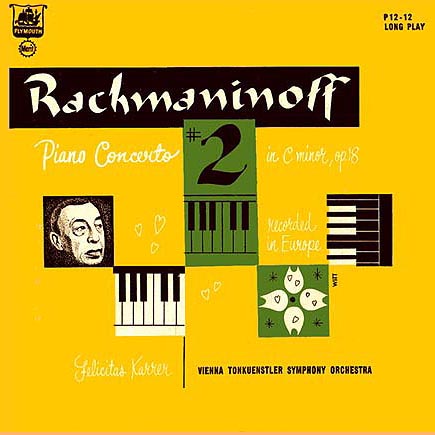
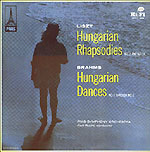
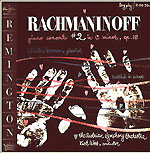
the performing soloists were mentioned. The same procedure was followed for other recordings like Rachmaninoff's 2nd Concerto by Karrer and Wöss. The name of Wöss is omitted on cover and label. The orchestra is again the Vienna Tonkünstler Orchestra. It is not clear if the recording of violinist Walter Schneiderhan and pianist Erich Berg performing Beethoven's "Kreutzer Sonata" on Plymouth P 12-21 was also released on Remington. A few releases appeared only on the cheap Plymouth label. One of these was a recording allegedly by the Linz Symphony (no conductor named) of short pieces by Haydn, Arne and others. In
the first years of the company's Lp business there was also the Merit Records
label. |
 |
The
recording of Rachmaninoff's 2nd Concerto released on Remington R-199-32 and on
Plymouth P12-12. |
 |
 |
 |
|
Gabor, knowing that his product was lacking in technical quality and could not keep up with the race, gradually leveled down the items of the Remington catalog to products for the supermarket and gas stations to increase the turnover. The relatively small company did not have enough funds to improve the standard by hiring better production facilities. The result was that Remington recordings were no longer taken seriously by the competition and the reviewers. Most records did not have liner notes anymore, but just listed the other recordings which were available. The lists were topped by slogans like "Popular Classics - Famous European Orchestras & Soloists", "The World's Best Loved Music" and "Music for the millions". The omission of liner notes makes it often impossible to trace data about the performing artists. The lists of the Remington catalog was sometimes printed on the back of Plymouth records and vice versa. This also was proof that the product was not seriously handled anymore. And it occured that a cover of a Remington record was made of a cover for a Plymouth record as the inside showed. From 1958 on the recordings were released on different labels, exclusively sold in supermarkets, at gasstations, and in general stores. This was clearly a sign that the releases were not meant for the knowledgeable collector and they were not listed in the Schwann catalog. The specialist magazines and newspapers refrained from reviewing them. The labels were Paris, Palace, Webster, Buckingham. The plastic inner sleeves of the Paris records had an image of the Eiffel Tower placed in the center of a record. But also the labels Merit and Plymouth were continued. For September 1958 the introduction of the stereo-Lp was planned. To market his existing catalogue once again and eventually add new recordings in stereo, Gabor activated his Masterseal-label on a larger scale. The labelname was already mentioned in the Schwann catalog of January 1952 but only a few Masterseal-releases were listed. It was not without meaning that Gabor had masterfully chosen the name Masterseal. Many
a Masterseal release was initinally pressed from the already existing
Remington plates. Later new plates were made from the old tapes or newer tapes
were acquired and Austria seemed an important source. Rimsky-Korsakov's 'Scheherazade'
on Masterseal MSLP 5012 does not mention Karl Rucht as on Remington R-199-11,
but Kurt Wöss as conductor. Was Rucht's name deliberately replaced by Wöss?
Or was it a new recording? |
 |
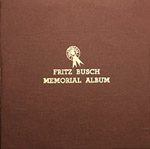
At left and below early Masterseal recordings from 1951 of Fritz Busch and Vittorio Gui respectively. |
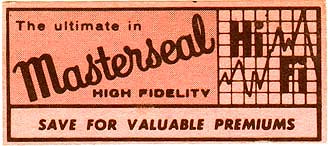
The logo of the Masterseal
editions from 1957. Masterseal stamps could be saved for special offers or price
reduction. | |
 |
|
Now most new recordings were done in the US. And if they had not been recorded in stereo than the recordings were enhanced in electronic stereo. Also new real stereo recordings of all sorts of genre were made. And aparently in some cases tapes from the Viennese Symphonic Orchestra were bought and released. The stereo release on Masterseal of Tchaikovsky's Violin concerto states that Michèle Auclair is the soloist, but in reality she was not the performing artist at all. Her name was only there to increase sales or to bypass copyright. The Masterseal mono edition of Tchaikovsky's Concerto Op. 23 was the re-release of the Conrad Hansen/Wolfgang Sawallisch recording. The
stereo-edition of Tchaikovsky's 1st Piano Concerto on Masterseal also states Hansen
as the soloist, while in reality he was not the performing pianist. He never recorded
this concerto in stereo. Who the performers of these concertos really were is
not known to me. |
 |
|
When a Masterseal record in a stylish gatefold cover was released to commemorate the deseased conductor Fritz Busch, Don Gabor printed on the inside that the record was a production of International Masterworks Inc. Columbia records objected to the use of the mention of International Masterworks Inc. which was not only misleading, but was unlawfull. Columbia also argued that the label's name MASTERSEAL was confounding the record buying public with MASTERWORKS. Although
the early gatefold deluxe editions were not seen as a threat by Columbia as they
were few, when Gabor introduced the later series around 1957, there was a lawsuit
and Don Gabor finally had to give up the name. He surely had not reckoned with
the fact that he had to give up Masterseal on such a short notice when he revived
it. In order not to start over, the discs were released without the proper Masterseal
logo and label and instead the old Remington Musirama label was used as a temporary
measure. Masterseal was finally disontinued and other labels were created. The
same happened when David and Samual Josefowitz of Concert Hall Society recordings
introduced their subscription label Musical Masterworks Society. They were
not allowed to use 'Masterworks' and the name was changed to On some Paris and Palace releases names of orchestras and performers were not always mentioned correctly. The object was of course to divert the buyer and give the impression that the recording differed from the earlier Remington or Plymouth discs. But it could as well be that Gabor avoided paying the artist and th original producer. Hans
Sailer conducts the International Symphony Orchestra in the Suite from Swan Lake
Op. 20 (Tchaikovsky) while this probably is the recording of Jonel Perlea with
the RIAS Symphony Orchestra. The disc features also the "1812 Overture"
(Tchaikovsky) conducted by Hans Sailer. Comparing this release to the Masterseal
edition of the 1812 Overture conducted by Kurt Wöss, it is clear that Hans
Sailer is definitely not Kurt Wöss. Kurt Baumann conducts Grieg's Suite No. 2 from the music to "Peer Gynt" and Liszt's 1st Concerto on PST-610. The Suite No. 1 can be found on Side 2 of Palace M-601 with on the first side Tchaikovsky's "Romeo and Juliet Overture". That is clever programming! Now the record company mentioned on the covers is Continental Records. But also Buckingham Records is used as company name, but the adress is the same: 630 9th Avenue. |
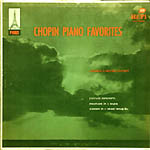
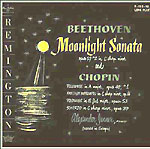
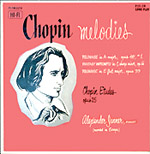
| Alexander Jenner's Beethoven/Chopin program was first released on Remington. | The Chopin pieces appeared on Plymouth coupled with the Etudes Op. 25. |
The same Plymouth plates
were used for the Paris release. But now the pianist was named Robert Garand.
For obvious reasons: the license had expired. |
 |
 |  |
|
Palace
PST 603
mentions Manfred van Cleef as soloist in Tchaikovsky's 1st Concerto performed
with the Austrian Symphony Orchestra. This probably is the later recording with
Conrad Hansen as soloist. A pianist with the name Manfred van Cleef most certainly
did not exist. Liszt's Piano concerto No. 1 from Remington R-199-166 performed by Edward Kilenyi with the RIAS Symphony Orchestra conducted by Jonel Perlea seems to have appeared in a slightly different tonal balance and in fake-stereo on Palace PST-610 but is attributed to the Viennese Symphonic Orchestra and conductor Kurt Baumann. No mention of the pianist is made. And it is not sure if this was the Kilenyi recording. Remington recordings were still listed in the 1958 Schwann Artist Catalog. But by that time the label was more or less discontinued. In 1962 Gabor revived the Continental-label and once again marketed the recordings of Red Norvo with Sarah Vaughan and Ethel Waters which had become vintage recordings by now. He also added recordings by artists of popular music and folk music, which always had been his strength. The Continental label lasted untill 1965. Some of the few releases which were listed:
#1501/6001 - Victor Zembruski: 'Dance' After
the introduction of the 8 track casette Gabor produced his own brand: Radiant.
On it were bootleg recordings of among others Judy Garland TV Shows released.
Gabor was sued and fined and had to pay for the illegal releases.
|
Copyright 1995-2008 by Rudolf A. Bruil