"Genius
will always be recognized."
Mankind is willing to believe this adage. But how many geniuses are
lost, how many talents do not reach their full potential and were not
even forgotten, because they never came to fame? We do not know.
What we know is that a genius is not necessarily a being who is praised
by millions and whose creativity is well marketed by a multinational.
Simon
Barere was a genius.
Since his untimely death, his name surfaces from time to time in every
decade with a few phonographic releases of historic performances, and
is subsequently forgotten.
To the majority of music lovers of today Barere's name is quite new,
notwithstanding his geniality. Simon Barere put a spell over his audience
through his mastery of the keyboard, his insight in the score, and the
ability to convey this by displaying a great variety of tensions and
of gradations in dynamics, while keeping the image perfectly clear,
as if the recreation of the composer's work was almost non physical,
an abstraction, an entity on its own. This is especially true for his
performances of works by Franz Liszt, Piano Sonata in B minor
and Funérailles, both recorded in Carnegie Hall in 1947.
Barere's
Carnegie Hall Liszt recital on R-199-85
Cover by Alex Steinweiss..
When
Simon Barere had suddenly collapsed while performing the first bars
of Grieg's A minor Piano Concerto in Carnegie Hall with the Philadelphia
Orchestra conducted by Eugene Ormandy, on April 2, 1951, and
died backstage, the world had lost an extraordinary musician, interpreter
and teacher, who was not always recognized as such because of restrictions
and unfortunate circumstances he had encountered during his entire life.
In his younger years he often had to keep his family alive by playing
in cinema's and restaurants instead of being celebrated in the concert
halls of the world's music capitals. And many times he had to flee a
country because of discrimination and restrictive regulations.
Simon
Barere was born in Odessa on September
1, 1896, in a large family. (His actual name was Barer but when in England
an 'e' was added to avoid mispronunciation.)
As a phenomenally gifted boy of 11 he was admitted to the Odessa
Imperial Music Academy. After his father had died he supported his
mother and his sisters. At sixteen, after his mother had died, Simon
went to St. Petersburg to study at the Conservatory directed
from 1905 till 1912 (some sources mention 1917) by symphonist Alexander
Glazunov.
There must have been a natural affinity between the creative, individualistic
and human Glazunov and the young, somewhat reserved, yet strong
Barere. Glazunov wholeheartedly protected the young talent against the
anti-Semitic regulations in the Russia of the Czars. And as Barere's
nature seemed to focus on precise detail in the first place, Glazunov's
influence apparently was to let him also see the greater concept, the
synthesis.
In
St. Petersburg Barere studied for two years with pedagogue Anna Yesipova
(Annette Essipoff) (1851-1914) until her death. Anna Esipova was
also the teacher of other remarkable pianists like Leff Pouishnoff
and Sergei Prokofiev. After Esipova's death Barere studied with
Felix Blumenfeld (1863-1931) with whom he certainly could share
the same taste. Blumenfeld certainly taught him not only to keep his
strength, precision and virtuosity, but also not to neglect refined
feeling and to show vulnerability in the performance. (Blumenfeld was
the teacher of such other remarkable performers as Wladimir Horowitz,
Heinrich Niehaus, and another strong - and greatly underestimated
and ignored - personality, Maria Grinberg.)
Simon
Barere
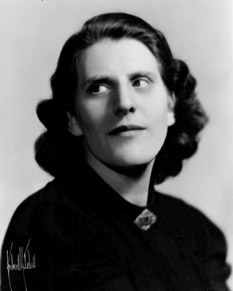
Picture restored by R.A.B., taken from the back of Remington R-199-85
After
graduation Barere returned to Kiev and started off as a professor himself
at the Kiev Conservatory. After Lenin's death in 1924 liberalism
and liberties made place for the restrictions of the regime of Joseph
Stalin and this made it even more difficult to build a career as
a Jewish pianist and make a living in the world of music. Despite the
difficulties, Simon Barere was able to move to Riga in 1928 to become
a cultural ambassador for the Baltic countries. There his wife, pianist
Helen Vlashek, and his 7 year old son Boris, finally
joined him. From there they could escape to Berlin. Even there he could
not establish himself as a serious performer because of the growing
fascist climate in Germany and the takeover by the Nazis in 1933.
He
traveled to Great Britain to perform and fortune changed his life. In
1934 he made his concert debut with Sir Thomas Beecham (as did
Edward Kilenyi in the same period)
and he was contracted by His Master's Voice to record solo pieces. These
recordings were released in the USA on the Victor label. The HMV
recordings have been released on CD on the APR label.
Two
years later Barere came to the US and made his debut in Carnegie
Hall on November 9, 1936, and immediately was recognized as one
of the authoritative pianists of the period. He knew Rachmaninoff, Wladimir
Horowitz and Leopold Godowsky. He settled in the US for good in 1939.
After
the Second World War Simon Barere gave several recitals in Carnegie
Hall in 1946, 1947 and 1948. The performances of 1947 were released
by Don Gabor on the Remington label (R-199-85). In March 1951
Barere also made recordings in the studio for Remington. They were released
on R-199-17 and R-199-35. He and Donald H. Gabor had more
sessions planned, but fate decided otherwise on that fatal day in Carnegie
Hall.
Despite
the fact that Barere was never offered a big contract - Victor released
only four shellac discs originating from England - therefor the Remingtons
are a testimony of his extraordinary art, thanks also to the efforts
of his son Boris Barere. There are recordings of solo pieces
by Liszt, Chopin, Beethoven, Scriabin, Bach, Blumenfeld. There is also
a recording of Liszt's 1st Piano Concerto.
There even exists a recording
of Rachmaninoff's Piano Concerto No. 2, Op. 18, with Dutch
born Antonia Brico
conducting.
The Barere-biography on the cover of the APR LP originally stated
that the date of recording and the names of orchestra and conductor
of the Rachmaninoff Concerto are unknown. However,
when in the late nineteen seventies Dutch Television aired the documentary
film, made in 1974 by folk singer Judy Collins (directed by Jill
Godmilow) about her teacher Antonia
Brico (1902-1989), Antonia:
A Portrait of the Woman (1974), I noticed that a disc is
shown of
a recording of Sergej Rachmaninoff's Piano Concerto No.2 Op.18.
Printed on the label, typed with a typewriter, is the name of Simon
Barere as soloist and as date of recording 1942 is mentioned,
the last season Antonia Brico conducted the Women's Symphony
Orchestra in New York before leaving for Denver.
Although
the tape recorder had already been on display in Europe in 1935 during
the World Fair in Berlin, its existence and qualities only became known
in the US in 1946 after Jack T. Mullin (when on assignment in Germany)
had sent two machines home. It was Ampex who started to copy the "Magnetophon"
as the Germans called the machine. It was going to be the new sound
recording medium and it made the Long Playing record possible. But Boris
Barere recorded his father's live performances in Carnegie Hall on 78
rpm acetates, as was the medium used at the time. Making those recordings
was not an easy task as not only the sound level had to be set right
but also the next disc which was to be engraved had to be started at
the right moment so no note was lost.
The
recording of the Liszt B minor Sonata was made on November 11,
1947. This recording and the one of the Funerailles were released
by Don Gabor on Remington R-199-85 to commemorate the pianist
on the occasion of the first anniversary of his death in 1952. The LP
has the usual Remington anomalies but also shows that the performances
were originally recorded on acetates and that the transfers are extremely
well done. They fully convey the atmosphere of the live performance
and still have the sound quality of a direct to disc recording with
an intense, dramatic and full piano tone. Irving Sablosky, critic of the Chicago Daily News, commented
in a review on Simon Barere's Carnegie Hall recording of the Liszt Sonata.
A quote was printed in the 1953 Remington Records Catalog: "...
fantastic, diabolical virtuosity seldom met and never before, to my
knowledge, captured thus on records."
On the back of the cover are extracts from reviews of several critics
and some quotations from Olin Downes' article in The New York Times
of April 3, 1951, the day after Barere had died.
"Simon
Barere, Russian pianist, collapsed and fell to the floor last
night in Carnegie Hall as he was playing the Grieg Piano Concerto
with the Philadelphia Orchestra. (Eugene Ormandy, conducting).
"Mr.
Barere was 55 years old. He was born in Odessa in 1896. He went
to St. Petersburg Conservatory as a phenomenally gifted boy of
11 to study with the famous Annette Essipof. Later he won the
Rubinstein Prize and he commenced to tour Europe. He made his
first appearance in New York in Carnegie Hall on Nov. 9, 1936,
and immediately was recognized as one of the authoritive players
of the period. He continued to tour America and Europe, appearing
with all the leading orchestras, including the New York Philharmonic-Symphony,
on many occasions.
"There
was no more modest, studious and sincere artist. Others sought
the limelight aggressively. Mr. Barere was concerned with only
one thing, the humble service of music. He had a prodigious technique.
It may be added that he was a prodigious musician, which is not
necessarily the same thing. His knowledge was such that many pianists
great and small, sought his counsel as coach and teacher. He leaves
not only a great but an enviable reputation behind him."
- Olin Downes
In
1973 this performance was released on Turnabout THS 65001, the H indicating
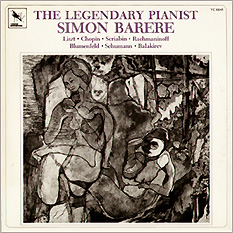
"historic". On Varèse-Sarabande VC 81045, Tom
Null released "The Legendary Pianist Simon Barere" with some
live recordings made in Carnegie Hall, the program of Remington R-199-17,
and he added two Scriabin Etudes, Preludes and Polka by Rachmaninoff,
Toccata and Traumeswirren by Schumann and Balakirev's Islamey. The two
Scriabin Etudes are Nos. 10 and 12 from Opus 8 and were released for
the first time on record. See The Remington Series.
Simon
Barere often emphasizes the virtuosity of the compositions, and it is
obvious that - apart from his concept of the inner value of a composition
- speed is a major ingredient of his interpretation and choosing for
speed is sometimes a restriction resulting in untidy playing. Among
his outstanding renderings are also Chopin's Scherzo No. 3 and Blumenfeld's
Etude for the Left Hand.
Varèse-Sarabande
VC 81045 (1978) -
An original Don Gabor Production prepared
for release by Tom Null, Dub Taylor, and Chris Kuchler. Remastered
by Bruce Leek. Duplication engineer: John Arici.
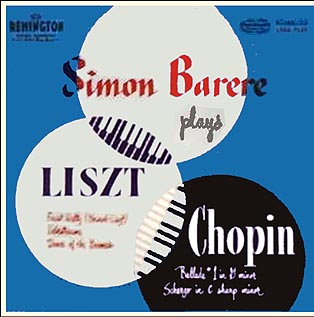
Remington
R-199-17
contains pieces by Liszt (Faust Waltz, Liebestraum and Gnomenreigen)
and Chopin (Balade No. 1 and Scherzo No. 3). These recordings were made
in 1950 and are of a far higher sound quality as a tape recorder was
used. They were probably made in the Mastertone Recording Studios
Inc. in New York City NY 10036, rented by Don Gabor and George Curtiss
on several occasions. Although
some of Barere's Carnegie Hall performances are most captivating, the
studio gave the pianist a setting for better concentration and the possibility
of splicing. The performance of the Faust Waltz is considered
to be one of the finest ever done of the piece, and is actually better
than Barere's earlier Carnegie Hall version. Later this recording was
issued on Turnabout 65001 as well, the tapes being supplied by American
Tape Corporation as Gabor's company was named then.
Simon
Barere as pictured in a "MUSIC FOR MILLIONS" listing on
the back of an early Remington Record.
Picture edited and restored by R.A.B., taken from
the back of Remington R-199-85
Remington
R-199-35
is another memorial album with Don Juan Fantasy (Mozart-Liszt), Etude
de concert (Liszt), Sonetto del Petrarca (Liszt), Valse oublié
(Liszt) and Campanella (Paganini-Liszt). Also from tape recordings made
in 1950 by Remington.
Remington
R-199-141 (issued in 1953) contains Balakirev's Islamey, Rachmaninoff's
Preludes Nos. 5, 12 and Polka, and Blumenfeld's Etude for the Left Hand,
Schumann's Toccata, Traumeswirren, and Liszt's Rhapsodie Espagnole.
These are indicated as being live recordings made in Carnegie Hall.
There
is some controversy about the recordings of Schumann's Toccata and Liszt's
Rhapsodie Espagnole (Spanish Rhapsody) featured on R-199-141. These
takes could have been dubbings from old HMV recordings and applaus could
have been added as Bryan Crimp and Boris Barere (Simon Barere's son)
maintain. John Wilbraham though defends Don Gabor in this matter. He
writes:
"On your site you make mention of
the APR re-issue of a set of acetates of Barere playing the
Rachmaninoff Concerto No 2, for your information on the date
of which we must thank you. I recently purchased this CD and
was interested to read in the notes provided by Bryan Crimp
that 2 recordings of Barere issued by Remington as live Carnegie
Hall recitals are, in effect ‘fakes’, produced by
taping his earlier HMV studio recordings and adding taped applause
at the end.
Mr
Crimp goes on to say that according to Boris Barere, the pianist’s
son, no recording was ever made at Carnegie Hall of the two
pieces in question (Schumann's Toccata and Liszt's Rhapsodie
Espagnole, Ed.), although his father did perform them there.
Such a fabrication is probably unprecedented, but Mr Crimp lays
the blame fairly and squarely when he says ‘fake audience
applause had been applied by Remington for inclusion on an LP
containing live Carnegie Hall recordings.’
I
have relistened to the record in question [R-199-141, issue
date 1953] and have no doubt that these 2 tracks are indeed
fabrications; it would be convenient therefore to lay the blame
at Remington’s door, as a commercial enterprise without
scruples about misleading their buyers or stealing another company’s
recordings; unfortunately, I have a problem with this. One of
the two tracks, that of the Spanish Rhapsody of Liszt, had actually
been previously issued by Boris Barere himself on a private
LP [CH 44] of his father ‘Recorded During Recitals at Carnegie
Hall’.
This
record was fairly widely circulated prior to Remington’s
release, and having listened to copies in my own collection
I can confirm that although there is some sound engineering
in the Remington re-issue, the two are basically the same, with
identical protracted applause added at the end. Now since Mr.
Barere has asserted for APR that his father was never recorded
in this work at Carnegie Hall, it follows that he must have
known that the recording he was issuing ‘in response
to the requests of many of my father’s friends’
was in part not genuine. There is no way of knowing what role
Remington may have played in the fabrication previous to this,
if indeed they knew about it at all. Mr. Barere gives Alexander
Stock as the name of his sound engineer, and I have not seen
any association of him with the Remington label. - John Wilbraham,
Great Britain.
It
is, however, indeed easy to distinguish the piano tone of a 78 RPM shellac
from a piano recorded on an acetate (engraved lacquer). The acetates
give a more chiseled, defined, and also a more dynamic sound quality
with a wider frequency band. This is certainly heard on the Remington
of the Liszt Sonata on R-199-85, and on practically all selections on
the Varèse-Sarabande LP release prepared by Tom Null in 1979.
But Schumann's Toccata on that disc was clearly taken from the HMV 78
RPM disc. In this instance Don Gabor obviously followed Eli Oberstein's
method of releasing material from other companies without being detected.
Rhapsody Espagnole is not issued on the Varëse-Sarabande label.
Also the B minor Sonata was not issued by Tom Null. He probably was
not looking for the acetate discs or did not find the transfers to tape
when searching the boxes of Remington recordings. Varèse VC
81045 shows also which pieces were recorded in the studio.
Remington
R-199-85
contains Barere's interpretation of the Liszt Sonata which shows
virtuosity, but never for the sake of displaying a superior technique
as in recordings of other pianists. There is no sentimentality. His
sense for phrasing, for dynamics, for building up and releasing tension
have a sincerity which leads the listener to the heart of the music,
to the core of what human existence is all about.
Right from the day Remington R-199-85 was released, Barere's
performance of Liszt's Sonata was recognized as the best interpretation
that was available on disc.
Harold
C. Schoenberg
of The New York Times wrote:
"...it has that combination of excitement and bravura that
Barere invariably brought to his Liszt (...). In time to come
this disc will be a collector's item."
Noel
Strauss wrote:
"More completely satisfying readings of the pieces by Liszt
presented are hardly imaginable. The "Funerailles" of
that master was not only a tour de force of living octaves, but
thrilling in its dramatic forcefulness and deeply affecting in
its moments of sensitive lyricism."
Warren
DeMotte's evaluation from 1955 published in The Long Playing
Record Guide reads:
"Barere plays with magnificent drive, poetic imagination,
and sincere conviction."
Click here
for a Sound Clip of the introduction from the Liszt Sonata taken
from Remington LP R-199-85.
In
1989 Appian Publications and Recordings (APR) transferred the
old acetates to CD. As remastering techniques have vastly improved
of late, again new transfers have been prepared of Barere's performances.
The 1947 Carnegie Hall recital with the Liszt Sonata has been prepared
by Bryan Crimp with annotation: "Simon Barere, His celebrated
live recordings at Carnegie Hall, Volume Three: 11th November 1947".
The program also includes Renaissance - Pastorale, Gigue & Tambourin
(Godowsky), Ballade No. 1 and Impromptu No. 1 (Chopin), Etude for the
left hand (Blumenfeld), Islamey (Balakirev) and encores by Scriabin
(Etude in D sharp minor, Op. 8/12), Rachmaninoff (Polka de W.R.), Schumann
(Traumes Wirren) and Weber (Perpetuum mobile from Piano Sonata No. 1).
Thanks to the efforts of APR, today everybody can hear recordings of
Simon Barere. But if you are a collector and encounter a relative good
pressing of a Remington release, you should not hesitate to take it
home.
As
a music lover one depends very much on the taste of the technician.
Does he go for an extremely clean transfer with a cold piano tone or
does he want to convey the atmosphere by not cleaning up the signal
too drastically and preserving a more natural sound with inevitably
some distortion? The technician's choice makes a great difference to
the listener's perception, while conveying more or less the nature of
the performance. If you play records and do not mind hiss and surface
noise, I would suggest buying the Remington disc with Liszt's Sonata
as well and you will be transported back to 1947.
Text
(c) Rudolf A. Bruil - March, 2001
This article - as all of my articles - is copyrighted.
Please do not reproduce this article in whole or part, in any form,
without obtaining my written permission.




 There even exists a recording
of Rachmaninoff's Piano Concerto No. 2, Op. 18, with Dutch
born Antonia
There even exists a recording
of Rachmaninoff's Piano Concerto No. 2, Op. 18, with Dutch
born Antonia 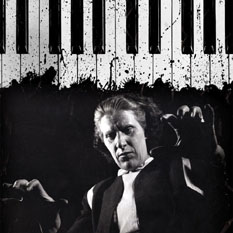 Brico
conducting.
Brico
conducting.