|


The first edition of Dvorak's Cello Concerto with Gaspar
Cassado and conductor Kurt Wöss on RLP-199-38.


Cello
Sonata No. 1 by Johannes Brahms with Otto Schulhof at the piano.

Dvorak's
Konzert H-Moll, Op. 104 released in Gernany on the Diamant label (Bestellnummer
BL 745).

The
6 Cello Suites of Johann Sebastian Bach on 3 LPs were recorded in the
late nineteen fifties by VOX (Vox Box VBX 15).

Gaspar
Cassadó formed a trio with violinist Yehudi Menuhin and pianist
Louis Kentner. The trio recorded Ravel's Piano Trio and Mozart's K 542
for EMI. The recording was released in 1961. Shown here is the US Angel
issue.


|
In
the era of the shellac record, the leading cellists were Pablo Casals
(1876-1973), Emanuel Feuermann (1902-1942), Gregor Piatigorsky (1903-1976),
Pierre Fournier (1906-1986), André Navarra (1911-1988), and
of course Gaspar Cassadó (September 30, 1897 – December
24, 1966).
Cassadó was not only known
for his stylish interpretations but also because he himself was a
composer and arranger. Among his compositions were "Danse du
diable", "Requiebros", and "Serenade". He
made arrangements of "Intermezzo" from Goyescas (Granados),
Laserna's "Tonadilla" and of Schubert's "Sonata for
Arpeggione" with an orchestral accompaniment.
Cassadó's father, Joaquim, was a composer, organist and choral
conductor. Young Gaspar received a scholarship from the municipality
of Barcelona, the city he was born in. In 1910, at the age of 13,
he became a pupil of Pablo Casals. In 1918 he toured Europe and South
America. Cassadó played chamber music with Harold Bauer
from Great Britain, Arthur Rubinstein and José
Iturbi from the USA. He appeared with Willem Mengelberg,
made several recordings with the Berlin Philharmonic Orchestra under
Hans Schmidt-Isserstedt for the Polydor label (Deutsche Grammophon)
and was often accompanied by then famous pianist Michael Raucheisen
(1898-1984). In his later life he taught at the Accademia Musicale
Chigiana in Siena, Italy.
The
following titles of 78 RPM recordings are compiled from two editions
of The Gramophone Shop Encyclopedia of Recorded Music, Simon &
Shuster, New York 1942, and Crown Publishers, New York, 1948, respectively.
Chopin:
Cello Sonata - Polydor PD 95027
Chopin: Nocturne No. 2 - Polydor PD95027
Schubert: Sonata for Arpeggione, arranged for 'cello and orchestra
by Gaspar Cassadó, performed by Gaspar Cassadó and Symphony
Orchestra conducted by Hamilton Harty - Columbia CM139
Dvorak: Cello Concerto in B minor Op. 104, Berlin Philharmonic,
Hans Schmidt-Isserstedt - Telefunken E1893/7
|
|
| Haydn's
Concerto with Schmidt-Isserstedt and gems by Etienne Méhul,
Robert Schumann, Gabriel Fauré, Antonin Dvorak, Isaac Albeniz,
Camille Saint-Saëns, and Edward Elgar, accompanied by pianists
Michael Raucheisen, Willie Hammer, and Giuletta Mendelssohn-Giorgiani,
were recorded in the shellac era, before World War Two. These
and many other 78 RPM recordings were taken by the Russians when
they had liberated Berlin. They were later transferred to Lp and
issued by Melodiya on M10-43343-4. |
Mehul:
Gavotte - Telefunken A0283
Albeniz: Cadiz with Michael Raucheisen - Gramophone DA4885
Saint-Saëns: Le cygne (The Swann) - Columbia D1600
Cassadó: Requiebros, with pianist Michael Raucheisen
- Telefunken E1820
Tcherepnin: Ode, with Michael Raucheisen at the piano - Telefunken
A1830
Laserna: Tonadilla, Berlin Philharmonic, Hans Schmidt-Isserstedt
conducting - Telefunken A 1830
Haydn: Cello Concerto, Hans Schmidt-Isserstedt - Telefunken
SK3222/4
Händel: Largo - Columbia C-L2046, CQX-10487
Schumann: Träumerei - Polydor PD95027
Tartini: Cello Concerto, Berlin Philharmonic, Hans Schmidt-Isserstedt
- Telefunken E1820
The
following disk is not mentioned in either edition of the Gramophone
Shop.
Haydn: Piano Trio No. 1 with Adrian Aeschbacher (piano) and
Max Strub (violin) - Deutsche Grammophon 68383.
It
was a Siemens-Halske recording. In 1941 Polydor had become a Siemens
Halske company. Deutsche Grammophon 68383 was made in 1944 as is stated
by collectors. Siemens-Polydor recordings that had been made during
the years of World War II in Germany were controled after the war
by the Military Government of the Allied Forces and then issued on
the yellow Deutsche Grammophon label with the mention "produced
under license".
No
wonder that the liner notes of Remington R-199-128 with "Encores"
accompanied by pianist Otto Schulhof read:
As
we can hear in this selection of "Encores", GASPAR
CASSADO has earned an international reputation as a cellist
of great sensitivity of expression. Born in 1897 in Barcelona,
Cassado became an outstanding pupil of Pablo Casals. He has
appeared as soloist in memorable performances with all the
great orchestras of Europe and regularly makes triumphant
concert tours throughout the world. He is a successful composer
and arranger, though most renowned for the singing tones of
his cello, of which Olin Downes in a New York article said:
"great singers could envy him for his belcanto."
|
And
there is a short paragraph about Otto Schulhof, the accompanist who
does not always get the attention he deserves:
OTTO SCHULHOF,
the pianist on both sides of this recording, was born in Vienna
in 1889. He has toured Europe with such notable instrumentalists
as Fritz Kreisler, Huberman and Kubelik and he served for
thirty years as accompanist to the famous cellist, Pablo Casals.
|
|
|
|
On His Master's Voice D.B.1404 Otto Schulhof accompanies cellist
Pablo Casals playing Aria from J.S. Bach's Suiite in D minor.
On the other side Casals plays Andante (Bach) with pianist Blas-Net.
|
Information
about Cassadó on the covers of the Remington discs is scarce.
Even the liner notes on a later Vox recording (Vox lp PL 9360
with Dvorak's Concerto and Tchaikovsky's Rococo Variations from 1957,
conducted by Jonel Perlea) just add a few more names and details:
Gaspar
Cassado, was born in Barcelona in 1897, when he was only 5
years old he entered the music school of "Los Mercedes"
of which his father was the director. He soon showed his preledition
for cello. After only two years of study he gave his first
recital with great success, and the Barcelona authorities
decided to award him a scholarship for study abroad with some
famous cellists. He went to Paris where he pursued his studies
and came in contact with Ravel and de Falla. He played with
Alfredo Casella and Ricardo Vines and made a sound reputation
for himself. After the first World War, Cassado began his
brilliant career touring Europe and South America and he played
with all the famous orchestras and conductors such as Furtwangler,
Mengelberg, Weingartner, Beecham, Gaubert and many others.
Cassado is also active as a composer and many of his works
have been performed on both sides of the Atlantic.
|
 |
|
Gaspar
Cassadó around 1950.
Image taken from Don Gabor's early Masterseal
MW 45.
|
His
successful career was interrupted by the Second World War as so happened
for many artists living in Europe. After World War II most people
wanted to continue were they had left off just before the war broke
out. Not every artist could build upon the laurels earned before the
war. Cassadó had stayed in Italy and regularly travelled to
Germany to give concerts and to perform there for the Reichs Rundfunk
Gesellschaft.
He
was accused by Pablo Casals, his former teacher, of having collaborated
with the fascist rulers, or at least had sympathised with them. This
was a strain on the further development of Cassadó's career.

The
cover of the first edition of Dvorak's Cello Concerto played
by Gaspar Cassadó and conducted by Kurt Wöss on
Remington R-199-38.
|
|
|
Click
here
for a Sound Clip of a fragment of Antonin Dvorak's Cello
Concerto played by Gaspar Cassado, Kurt Wöss conducting.
|
|
|
For
Cassadó, like for so many artists, any concert booking was
welcome, any recording issued helped. To make recordings for the new
vinyl medium was especially important to further one's carreer. No
artist wanted to miss the opportunity to be connected to the modern
medium. It was already in 1950 that producer Marcel Prawy arranged
for the recording of Dvorak's Cello Concerto in B minor Op.
104, with conductor Kurt Wöss and the Austrian Symphony
Orchestra to be issued on the Remington label. The performance was
released in the fall of 1951 on Remington R-199-38. It was
probably the first recording Gaspar Cassadó made for the new
microgroove medium. That same recording was later issued in Germany
on the Diamant label, and in France on  Concerteum.
The performance was also issued on Gabor's Etude label (Ref.
702).
Concerteum.
The performance was also issued on Gabor's Etude label (Ref.
702).
In
July 1952 the Cello Sonata No. 1 Op. 38 of Johannes Brahms,
accompanied by Otto Schulhof at the piano, was released on
R-149-53. It was a welcome addition to the catalog as only
the Second Sonata Op. 99 in a reading by Gregor Piatigorsky had been
available till then. In that same month the Haydn Concerto with
Hans Wolf conducting was released on
R-199-79.
In
1953 R-199-128 was released with Gaspar Cassadó
playing short pieces.
On Side One it is violinist Michèle Auclair performing
Kreisler Favourites: Praeludium & Allegro (Pugnani-Kreisler); Melodie
(Gluck-Kreisler); Rondino On A Theme Of Beethoven (Kreisler); Songs
My Mother Taught Me (Dvorak-Kreisler); Serenade Espagnola (Chaminade-Kreisler);
Danse Espagnole (de Falla-Kreisler).
On the B-Side it is violoncellist Gaspar Cassadó who plays
these 'cello encores:
*Spinning
Wheel (Mendelssohn-Bartholdy)
*Nocturne Op. 9, No. 2 (Chopin)
*Gavotte, Op. 23 (Popper)
*Melody (Rubinstein)
*Valse Sentimentale (Tchaikovsky)
*Improvisations on "The Blue Danube" (Strauss-Cassado).
Both performers were accompanied by Otto Schulhof.
A
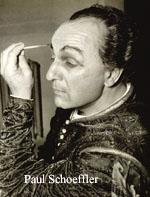
remarkable release was on Gabor's Masterseal record label with
Gaspar Cassadó playing solo and at instances accompanying baritone
Paul Schoeffler (MW-45).
At
right the deluxe gatefold edition of Masterseal MW 45 with Gaspar
Cassadó and Paul Schöffler. In Ave Maria (Franz
Schubert), Morgen (Richard Strauss), and Elegie (Jules Massenet)
Cassadó plays his cello while baritone Paul Schoeffler
sings. When Marcel Prawy was producing a recording with Paul
Schöffler, Cassado and Schöffler met and naturally
performed together.
The
pianist who accompanies Cassadó and Schoeffler is not
explicitly mentioned but should be the great Otto Schulhof.
|
|
These
are the titles on MW-45:
* Granados: Andalusian Dance (Spanish Dance No. 5)
* Saint-Saens: The Swan (from Carnival of Annimals)
* Bach-Gounod: Ave Maria (Schöffler)
* Tchaikovsky: Valse Sentimentale Op. 51 No. 6.
* Rubinstein: Melody Op. 3 No. 1.
* Strauss-Cassado: Improvisations on "The Blue Danube"
* Chopin: Nocturne in E-flat Op. 9 No. 2
* Strauss: Morgen Op. 27 No. 4 (Schöffler)
* Wagner: Albumblatt
* Schubert: Moment Musical Op. 94 No. 3
* Bach: Air
* Mendelssohn: Spinning Song Op. 67 No. 4
* Massenet: Elegie (from Les Erinyes) (Schöffler)
* Schumann: Träumerei Op. 15 No. 7
* Popper: Gavotte

|
 |
|
Haydn's
Cello Concerto with conductor Hans Wolf.
|
Bien
étonné de se trouver ensemble: Michèle
Auclair and Gaspar Cassadó, both accompanied by Otto
Schulhof.
|
The
Remington recordings eventually led to a contract with Vox Productions
for which Gaspar Cassadó recorded, together with conductor
Jonel Perlea, Dvorak's Cello
Concerto in B minor Op. 104, plus Tchaikovsky's Rococo Variations
(PL 9360), the Cello Concertos of Lalo and Saint-Saëns (PL 10.920),
and Cello Concertos by Haydn, Vivaldi and Boccherini (STPL 510.790).
On Vox VBX-15 are his performances of Bach's Complete Cello Suites
(BWV 1007-1012). Some of these Vox recordings were also released on
the German Orbis label, like his arrangement of the Sonata for
Arpeggione (Schubert) performed with Jonel Perlea conducting
the Symphony Orchestra of Bamberg (Bamberger Symphoniker) on CX-11030.
|
|
Cassado
is soloist in his own orchestral arrangement for cello and orchestra
of the 'Sonate für Arpeggione und Klavier' (Franz Schubert)
with Jonel Perlea conducting the Bamberg Symphony Orchestra.
There is also a wonderful performance by Cassado and Willem
Mengelberg and the Concertgebouw Orchestra from 1940, issued
with other recordings of Mengelberg in the Michael G. Thomas ARCHIVE
DOCUMENTS AD. 103/4, Limited Edition. |
In his Long Playing Record Guide from 1955
Warren
De Motte evaluates the earlier Remington recording of the
performance of Dvorak's Concerto. He says: "Cassado-Wöss
suffer from harsh recording; the music is well played by the cellist,
but poorly realized by the skimpy orchestra." And about the Haydn
Concerto: "Cassado's vigourous performance is weakly supported
by a coarse-toned orchestra."
This characterization by the reviewer was correct. After the tapes
had arrived in the US, Gabor made copies by dubbing the recording
to a consumer tape recorder with a lower speed and from those tapes
the lacquers were cut. As so many record companies, also Remington
used its own frequency characteristic which needed - when played back
- extra use of the tone controls. By adjusting the treble knob, surface
noise was reduced as well. In those early days of the LP, the RIAA
curve had not yet been chosen as the standard curve for all LP recordings.
However with the modern cartridges of today, a better signal can be
retreived from the groove if the disc has not been treated in a bad
way and for all sorts of anomalies a editing program can give a solution.
The January 7, 1967, issue of Billboard announced:
"Casado
Dies in Madrid. Gaspar Casado, internationally known cellist
and composer, died of a heart attack in a hotel here on Christmas
Eve. He was 69. A former pupil of Pablo Casals, his fellow Catalan,
Casado split with the maestro after Cassado continued to play
in Spain, Italy and Germany during World War II.
Casado made his American debut in 1936 with the Philharmonic
Symphony under Sir John Barbirolli at Carnegie Hall. He also
played under Lamoureux, Furtwaengler, Beecham, Weingartner,
Wood and Arbos." (The spelling Casado instead of Cassado
is Billboard's.)
|
A
few years after Gaspar Cassadó had died, Vox productions reissued
his performance of Dvorak's Cello Concerto with the Pro Musica Vienna
and Jonel Perlea which had been first released in 1957, but now in
simulated stereo as STPL 513.340.
Rudolf
A. Bruil, Fall 2005
|